
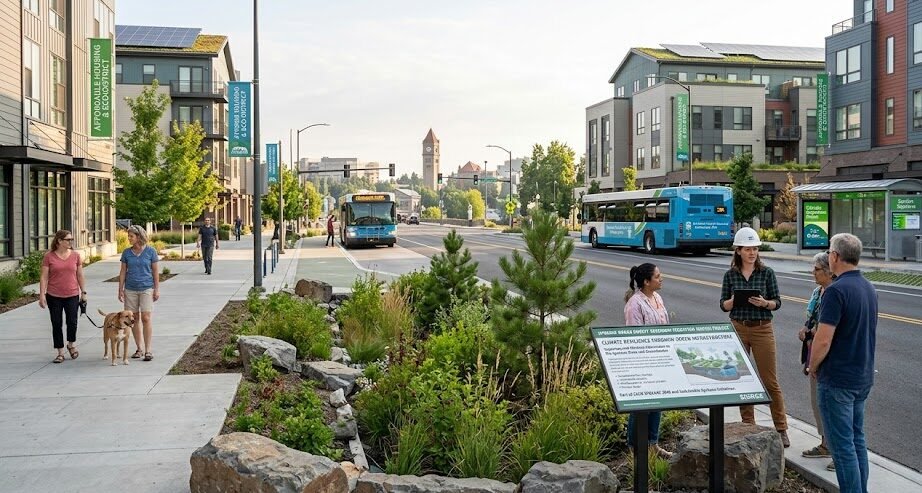
Understanding Urban Planning for Climate Resilience
Climate resilience has become a critical priority for cities across North America, and Spokane, Washington, stands at the forefront of this movement. Urban planning for climate resilience involves developing comprehensive strategies that help cities withstand, adapt to, and recover from the impacts of climate change. For Spokane, this approach integrates sustainable infrastructure, community engagement, and long-term environmental stewardship into every planning decision.
The city recognizes that climate impacts—including prolonged droughts, increased wildfire risk, and temperature fluctuations—require proactive measures embedded within urban development frameworks. By incorporating climate resilience into its planning processes, Spokane is building a more sustainable future for its residents and businesses.
Spokane’s Climate Challenges and Opportunities
Located in Eastern Washington, Spokane faces unique environmental challenges that demand innovative planning solutions. The region experiences:
- Extended dry seasons that increase wildfire vulnerability
- Water scarcity concerns affecting both urban and agricultural sectors
- Temperature extremes that impact public health and infrastructure
- Air quality issues exacerbated by regional wildfires
Despite these challenges, Spokane possesses significant opportunities to develop resilient systems. The city’s growing awareness of climate impacts has catalyzed interest in sustainable development, renewable energy initiatives, and green infrastructure projects that benefit both environmental and economic outcomes.
Key Components of Spokane’s Climate Resilience Strategy
Green Infrastructure Development
Spokane is investing in green infrastructure that manages stormwater, reduces heat island effects, and enhances urban biodiversity. Projects include expanding urban forests, creating permeable pavements, and developing pocket parks that serve multiple community functions while improving environmental resilience.
Water Resource Management
Sustainable water management represents a cornerstone of Spokane’s resilience planning. The city is implementing strategies such as:
- Rainwater harvesting systems for residential and commercial properties
- Watershed restoration projects along the Spokane River
- Efficient irrigation systems in public spaces
- Water-wise landscaping standards in development guidelines
Sustainable Transportation Networks
Reducing transportation-related emissions is essential to Spokane’s climate resilience efforts. The city is expanding public transit options, developing bike lanes and pedestrian pathways, and promoting electric vehicle adoption through infrastructure investments and policy incentives. These initiatives reduce carbon emissions while improving community connectivity and public health.
Building Energy Efficiency Standards
New and retrofitted buildings play a crucial role in urban climate resilience. Spokane has established building codes and incentive programs that encourage energy efficiency, renewable energy integration, and sustainable materials use. These standards reduce operational emissions and lower utility costs for residents and businesses.
Community Engagement and Participation
Successful climate resilience planning requires active community involvement. Spokane engages residents, businesses, and organizations through:
- Public workshops and planning forums
- Neighborhood sustainability initiatives
- Partnerships with local environmental organizations
- Educational programs on climate adaptation strategies
- Collaborative projects addressing community-specific needs
This participatory approach ensures that climate resilience strategies reflect community values and address local priorities while building collective capacity for implementation and long-term commitment.
Economic Benefits of Climate-Resilient Planning
Beyond environmental advantages, Spokane’s climate resilience investments generate significant economic benefits. Green infrastructure projects create jobs in construction, landscaping, and renewable energy sectors. Sustainable development attracts businesses and residents seeking environmentally responsible communities, enhancing property values and local tax revenues.
Furthermore, investing in resilience today prevents costly climate-related damages tomorrow. By proactively addressing climate vulnerabilities, Spokane avoids the substantial expenses associated with emergency disaster response, infrastructure repair, and recovery efforts.
Policy Framework and Governance
Spokane’s climate resilience strategy is supported by comprehensive policy frameworks that integrate sustainability across all city departments. The city has adopted:
- Climate action plans with measurable emissions reduction targets
- Comprehensive land use plans emphasizing compact, mixed-use development
- Development standards requiring sustainability assessments
- Procurement policies prioritizing environmentally responsible products and services
This coordinated governance approach ensures consistency and accountability in climate resilience efforts while providing clear guidance for developers, businesses, and community members.
Future Outlook and Continuous Improvement
Spokane’s commitment to climate resilience is not static. The city regularly evaluates its progress, incorporates emerging research and technologies, and adjusts strategies based on evolving climate science. Regular monitoring and assessment allow for adaptive management that maximizes effectiveness and efficiency.
As Spokane continues developing its urban environment, climate resilience principles will remain central to planning decisions. The city’s proactive approach serves as a model for other communities seeking to balance growth with environmental stewardship and long-term sustainability.
Conclusion
Spokane’s urban planning for climate resilience demonstrates how cities can systematically integrate environmental sustainability into development processes. Through comprehensive infrastructure investments, community engagement, supportive policies, and adaptive management, Spokane is building a more resilient, sustainable, and economically vibrant future. This holistic approach addresses immediate climate challenges while creating lasting benefits for current and future generations of residents.