Introduction
As urban centers expand at unprecedented rates, cities face a critical challenge: maintaining their unique character and cultural heritage amid rapid development. The tension between growth and preservation has become a defining issue for municipalities worldwide. This article examines the importance of preserving local identity in rapidly growing cities and explores practical strategies that communities can implement to maintain their distinctive qualities while accommodating expansion.
The Significance of Local Identity
Local identity encompasses the distinctive characteristics, values, and cultural elements that define a community. It includes historical landmarks, architectural styles, local traditions, small businesses, and the social fabric that binds residents together. When cities lose their unique identity, they often lose more than aesthetics—they risk eroding community cohesion, economic vitality, and resident satisfaction.
A strong local identity provides numerous benefits:
- Enhances community pride and resident engagement
- Attracts tourism and generates economic value
- Supports local businesses and entrepreneurs
- Preserves cultural heritage for future generations
- Improves mental health and social well-being
- Creates authentic, livable neighborhoods
Challenges Posed by Rapid Urban Growth
Rapid urbanization presents formidable obstacles to preserving local character. As cities expand, developers often prioritize growth over heritage conservation. Generic commercial chains replace independent shops, historic buildings make way for modern structures, and longtime residents are displaced by rising property values. These changes, while economically motivated, fundamentally alter the communities they affect.
The loss of local identity is particularly acute in neighborhoods experiencing gentrification or intensive development. Without deliberate preservation efforts, what made a city distinctive can vanish within a single generation, leaving behind a homogenized urban landscape indistinguishable from countless other growing cities.
Strategic Preservation Approaches
Heritage Conservation and Historic Preservation
Formal heritage protection mechanisms serve as foundational tools for identity preservation. Cities can establish historic districts where architectural standards are enforced, protecting building facades and ensuring development respects neighborhood character. Municipal governments should conduct comprehensive heritage inventories, documenting significant structures, sites, and cultural areas worthy of protection. Tax incentives and grants can encourage property owners to restore rather than demolish historic buildings, making preservation economically viable alongside growth.
Community Engagement and Planning
Meaningful community involvement in urban planning decisions ensures local voices shape their city’s future. Public consultation processes, neighborhood forums, and participatory budgeting initiatives empower residents to advocate for preservation priorities. When communities have agency in development decisions, outcomes better reflect local values and character preservation.
Supporting Local Businesses
Protecting and nurturing local commerce is essential for maintaining authentic community identity. Cities can establish local business zones with favorable zoning regulations, provide microfinance opportunities for small entrepreneurs, and create policies that limit chain store proliferation. Public markets, artisan districts, and heritage commercial corridors become focal points for community identity while supporting local economic activity.
Mixed-Use Development with Character
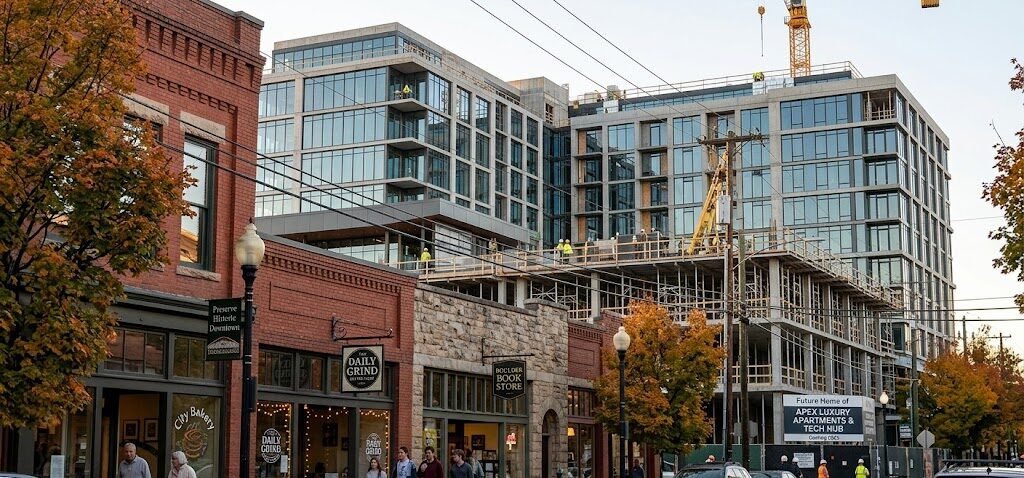
Modern development need not erase local identity. Progressive cities integrate new construction with heritage preservation through mixed-use projects that combine contemporary design with historic preservation. Adaptive reuse—converting historic structures for new purposes—allows cities to accommodate growth while retaining architectural heritage and character.
Cultural Documentation and Programming
Cities should invest in documenting local history, traditions, and stories through museums, archives, and oral history projects. Regular cultural events, festivals, and community celebrations reinforce shared identity and create spaces where residents connect with their heritage and each other.
Best Practices from Growing Cities
Several rapidly expanding cities demonstrate that growth and identity preservation are not mutually exclusive. Barcelona has implemented strict architectural guidelines ensuring new development complements existing character. Portland established growth boundaries and invested heavily in neighborhood preservation, maintaining distinctive communities despite significant expansion. Singapore balances modern development with preservation of heritage neighborhoods and cultural centers. These examples prove that intentional policies can preserve local identity while accommodating urban growth.
Conclusion
Preserving local identity in rapidly growing cities requires commitment, strategic planning, and community involvement. Cities that succeed in maintaining their distinctive character while growing do so through heritage protection programs, community engagement, support for local business, and intentional urban design. The challenge is substantial, but the stakes are equally high—the difference between cities that remain vibrant communities and those that become interchangeable urban sprawl often depends on whether local identity is preserved amid growth. By prioritizing identity preservation alongside development, cities can achieve sustainable growth that enriches rather than diminishes community life.